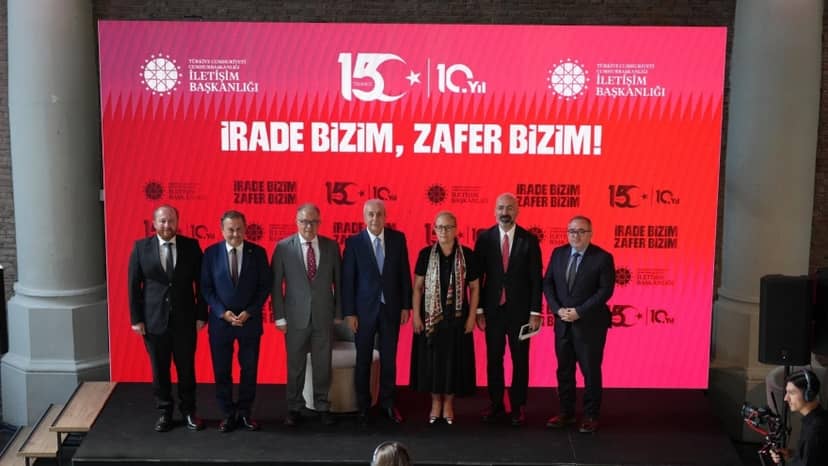
War in the Gulf and the Crisis of Regional Order Were Discussed at the First Panel Organized by Gulf Studies and Global Policies Center

Gulf Studies and Global Policies Center held its first panel titled “War in the Gulf: The Crisis of Regional Order”.
The first panel organized by the Gulf Studies and Global Policies Center of Ibn Haldun University, was held under the title of “War in the Gulf: The Crisis of Regional Order”, on April 7, 2026, in the Media and Events Center Event Hall.
Moderated by Prof. İsmail Numan Telci, the panel featured Assoc. Prof. Mustafa Yetim, Asst. Prof. Ömer Behram Özdemir, and Asst. Prof. Gökhan Ereli as speakers. The panel addressed questions from different perspectives regarding how the current crisis will reshape regional balances, the dynamics through which change will occur, and whether a new wave of military deployments is likely.
The Envisioned Process: From Gaza to Regional Expansion
One of the key assessments highlighted in the panel was that the developments were not unexpected. It was noted that the spread of the Gaza conflict to a regional scale was foreseen, and that the process of de-identifying Gaza clearly indicated this expansion. At this point, it was emphasized that the systematic policies applied to Gaza had transformed from a purely local conflict into a breaking point that fundamentally challenged regional power balances.
When describing the actors in the region, the term "militia crescent" is used instead of "Shia crescent". The importance of choosing this expression was highlighted. It was noted that this conceptual choice offers a more inclusive analytical framework instead of a sectarian reading. It was emphasized that this approach is significant because it indicates that proxy structures in the region should be evaluated not solely through sectarian identities, but on the basis of their military-strategic functionality.
The traditional bloc structure in the region was framed along three main axes: the revisionist front represented by Iran, the status quo front maintained by the Gulf countries led by Saudi Arabia, and Israel's revisionism based on instability. It was stated that this tripartite structure no longer produces a static balance but a dynamic field of conflict, with each actor directly restricting the room for maneuver of the others.
The End of Geopolitical Immunity
In the panel discussions that approached the crisis from a geopolitical perspective, it was emphasized that despite the Gulf region's investment of approximately $3.5 trillion in the US, the security umbrella has failed, the region's shield of neutrality has disappeared, and geopolitical immunity has effectively ended. This finding suggests that economic investments alone cannot guarantee security, and that the "purchasing security from abroad" strategy pursued by the Gulf countries for many years is facing a structural crisis.
While highlighting the need for a shift from bilateral interdependence to collective regionalism, it was stated that the main threat is perceived as Iran, but Israel's interests outweigh those of the Gulf countries. This situation reinforces the critical approach that the Gulf countries' security architecture is shaped more by the strategic calculations of external actors than by their own priorities. The potential role of Turkey in this transformation process was questioned, and it was emphasized that Turkey's entry into the region occurred through an internal Gulf crisis.
The panel concluded by emphasizing that the multifaceted nature of regional crises can only be understood through a holistic assessment of geopolitical, security, and social dynamics, and that the sustainability of the current order must be seriously questioned.
Related Content

Prof. İsmail Numan Telci Visits Pakistan upon the Invitation of the Ministry of Foreign Affairs
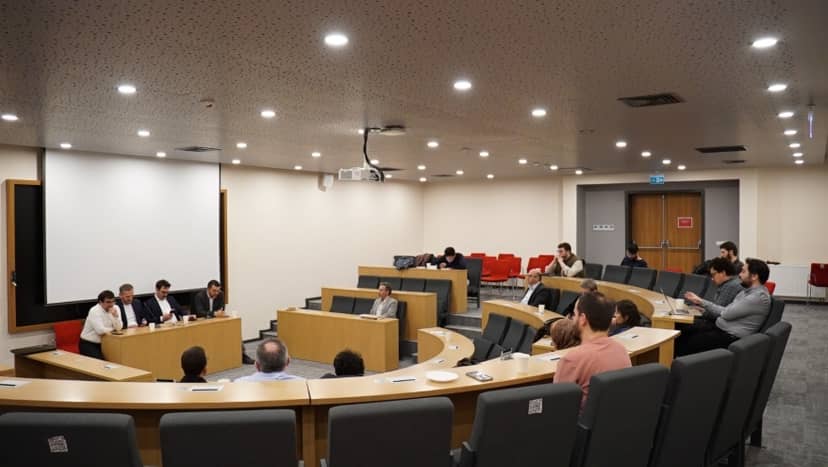
“War in the Gulf and Iran: From Regional Conflict to Global Crisis” Panel Held

Political Science and International Relations Department Shows Strong Student Presence at Midwest Conference

Assist. Prof. Stephen Siu Kay On Presented a Paper at the Marmara Political Science Congress

Assist. Prof. Sümeyye Kaya Uyar and Research Assistant Mustafa Yıldırım Presented Their Papers at the BISA-ISA Joint Workshops

Assoc. Prof. İdlir Lika Receives Second Prize in the 2021 Richard Gillispie Mediterranean Prize
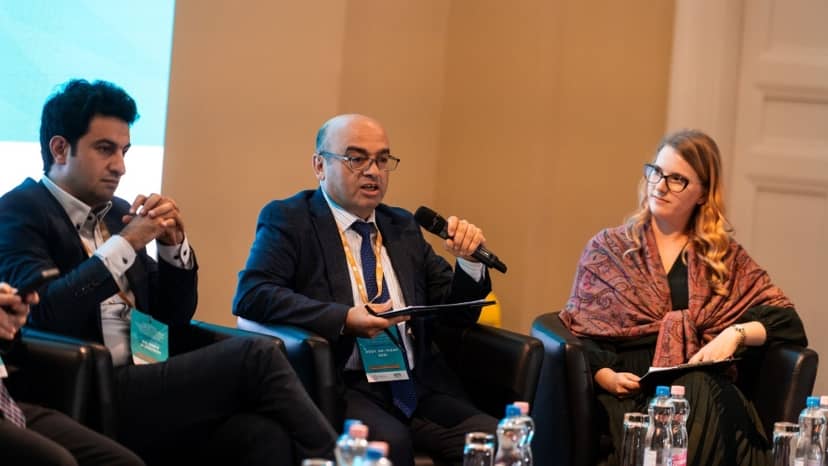
Prof. Yaşar Sarı Participated in the Opening Program of the 'Center for Turkic Studies' in Budapest
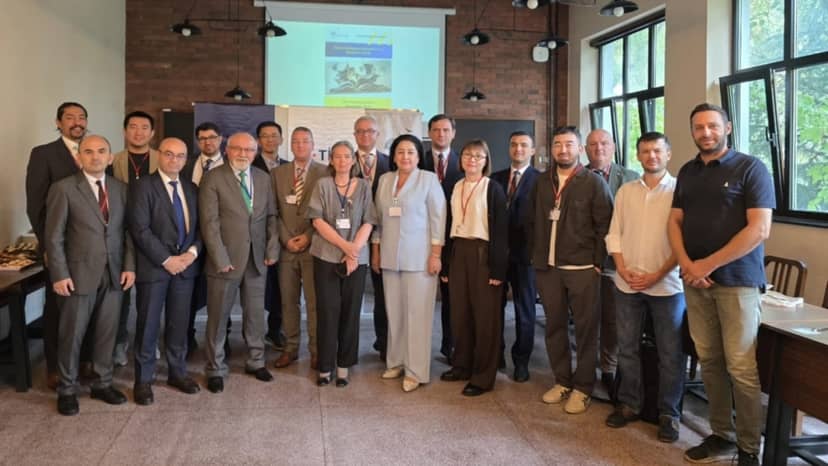
Prof. Yaşar Sarı Contributed to the 'INTPOLSEC Workshop Series'
